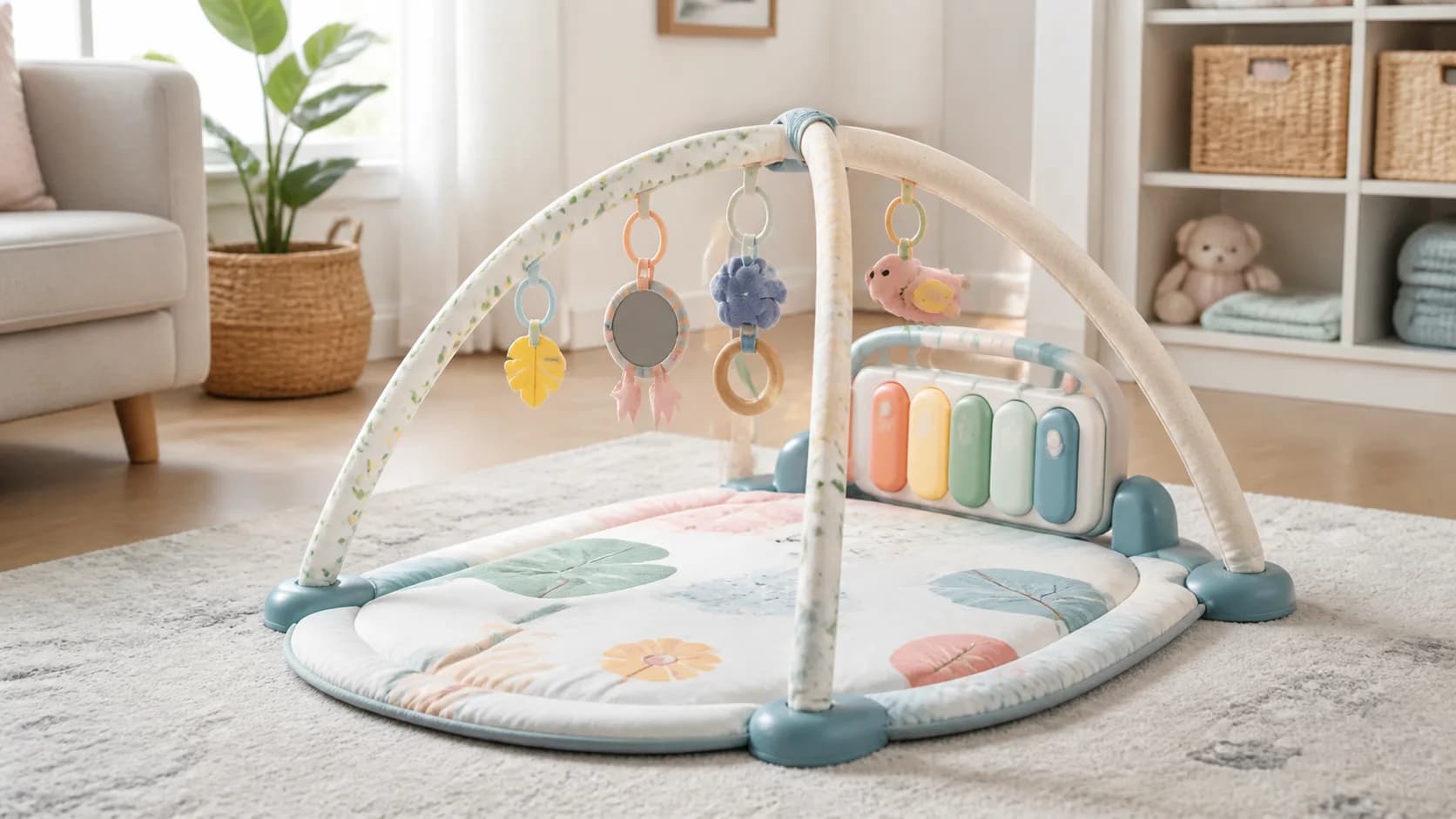
Measure clear floor space, not package size
Open the gym footprint on a firm, level floor and include arch width, kicking panel, caregiver kneeling space, and a clear perimeter away from furniture edges, cords, heaters, stairs, and pets. A compact stored shape does not prove it leaves enough unobstructed play space when assembled.
Match toys to the current stage
Check the exact age grading and instructions, then position only approved attachments where the baby can see or reach them without adding cords, loops, clips, or household objects. Reassess after rolling, grabbing, mouthing, sitting, or pulling changes the interaction. Remove damaged or no-longer-appropriate pieces immediately.
Inspect every attachment and battery door
Before each session, check arches, hooks, seams, mirrors, hard edges, toy closures, electronic panels, and battery compartments. Assemble and lock parts exactly as instructed. A detachable object must remain age-appropriate in the way it is used after removal, and a familiar toy still needs inspection after washing or travel.
Plan separate cleaning paths
The mat, fabric toys, hard plastic pieces, mirror, and electronic panel may have different care instructions. Confirm what can be machine washed, wiped, or submerged, then dry completely before reassembly. Avoid scented or improvised cleaners not supported by the instructions, and keep battery areas dry.
Keep play, sleep, and containment separate
Use the gym only for awake, supervised floor play. It is not a sleep surface, restraint, play yard, or substitute for caregiver observation. A simple washable mat with a few age-appropriate toys may be better when storage is tight, electronics would go unused, or the integrated design makes cleaning and stage changes harder.