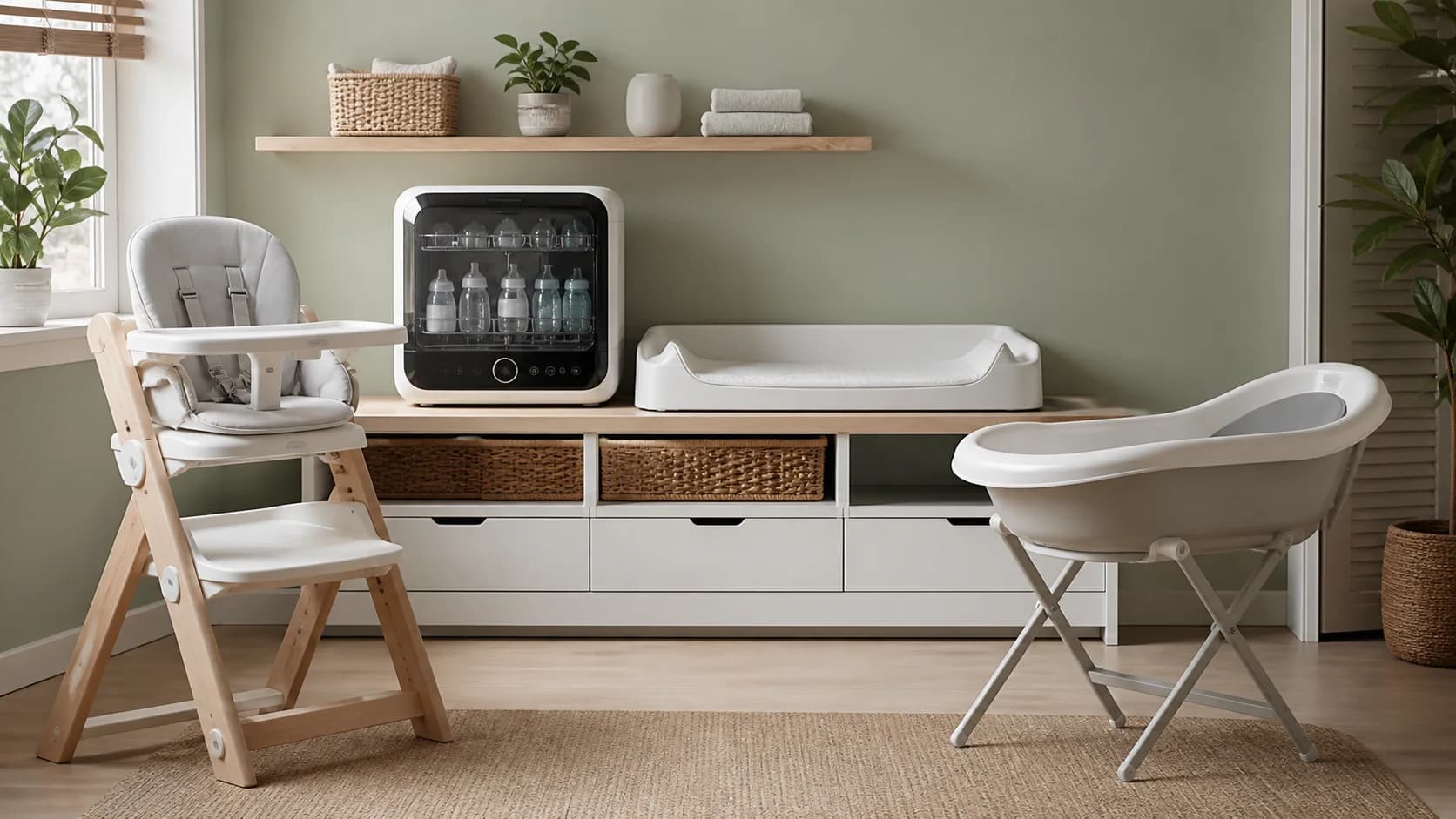
Prepare the complete bath before the child enters
Put towels, clean clothes, soap if used, and every other supply within adult reach. Set the tub only on a surface permitted by its instructions and check that it cannot slide, tip, fold, or drain unexpectedly. CPSC says young children must never be left alone near water, even for a moment, and must remain within arm's reach.
Match the stage and exact configuration
Infant tubs use different inclined supports, cushions, seated positions, and transition stages. Confirm the child's developmental ability plus every stated age, weight, height, or stage limit. A child who can roll, sit, pull up, or climb can change the risk before a broad age range ends. Do not add towels, bath seats, or improvised restraints unless the manufacturer explicitly permits them.
Do not outsource judgment to a thermometer
A built-in thermometer can fail, lag, or measure a different part of the water. Follow the product instructions, mix the water, and make the caregiver's own temperature check before the child enters. Keep hot-water controls inaccessible and never add hot water while the child is in the tub.
Remove the child before draining and inspecting
Lift the child to a secure place before opening the drain or cleaning the tub. Empty the tub immediately, inspect folds, hinges, cushions, plugs, and non-slip surfaces, then dry it according to the instructions. Stop use for cracks, mold that cannot be removed, a loose support, a failed lock, a leaking plug, instability, or any recall.
Buying decision: the decision
Start with newborn insert and milestone limits and sink, counter, or tub fit, not the longest feature list. Buy only when the product can support supervised bathing at a developmentally appropriate stage without relying on a bath seat as a safety device, the setup is realistic, and the household accepts drying, mildew checks, insert removal, storage, surface cleaning, and transition when the child exceeds a support limit. Skip it when the product is used on an unapproved elevated surface, the baby is left even briefly, parts are damaged, or the child exceeds stated limits.
Compare the alternatives: the decision
Infant bath tubs are the stronger choice when their specialized path can support supervised bathing at a developmentally appropriate stage without relying on a bath seat as a safety device. Choose sink inserts or supported bathing when it reaches the same outcome with fewer fit, setup, or maintenance dependencies—especially when the product is used on an unapproved elevated surface, the baby is left even briefly, parts are damaged, or the child exceeds stated limits.
Compatibility and fit: the decision
Compatibility passes only when all four checks are confirmed: newborn insert and milestone limits; sink, counter, or tub fit; drain, non-slip base, and support angle; drying, mold access, and storage. Verify the exact model and variant, then test the limiting condition before the return window closes.
Ownership cost and maintenance: the decision
Budget beyond checkout for drying, mildew checks, insert removal, storage, surface cleaning, and transition when the child exceeds a support limit. The disciplined choice is the one that remains serviceable and recoverable after normal wear, cleaning, updates, consumables, or a failed part.
Setup and daily workflow: the decision
Use this order: place on the approved stable surface, gather supplies first, test water temperature, keep one hand and continuous attention on the baby, and drain fully. Keep the previous routine available until normal operation and a safe recovery test both work.