Open the named Dr. Brown's All-in-One Sterilizer and Dryer listing to compare the live price, availability, delivery, seller, and returns.
Count bottles, pump parts, valves, caps, pacifiers, cycle time, drying time, and overnight demand before trusting a six-bottle headline.
Prepared by the NestCheck Picks editorial deskUpdated July 23, 2026
Quick answer
The practical answer
One feeding can create a bottle, nipple, collar, cap, vent pieces, and pump components. Lay out a complete load from the busiest part of the day and check whether steam and airflow can reach every item.
Direct answer to the buying question
What sterilizer-dryer capacity is practical for twins?
Count the family's largest real cycle—bottles, collars, nipples, pump parts, and pacifiers—and leave airflow around each item. For twins, cycle time and drying reliability usually matter more than a headline bottle count.
Page structure updated August 13, 2026•Evidence checked July 23, 2026•Reconfirm exact model and current terms
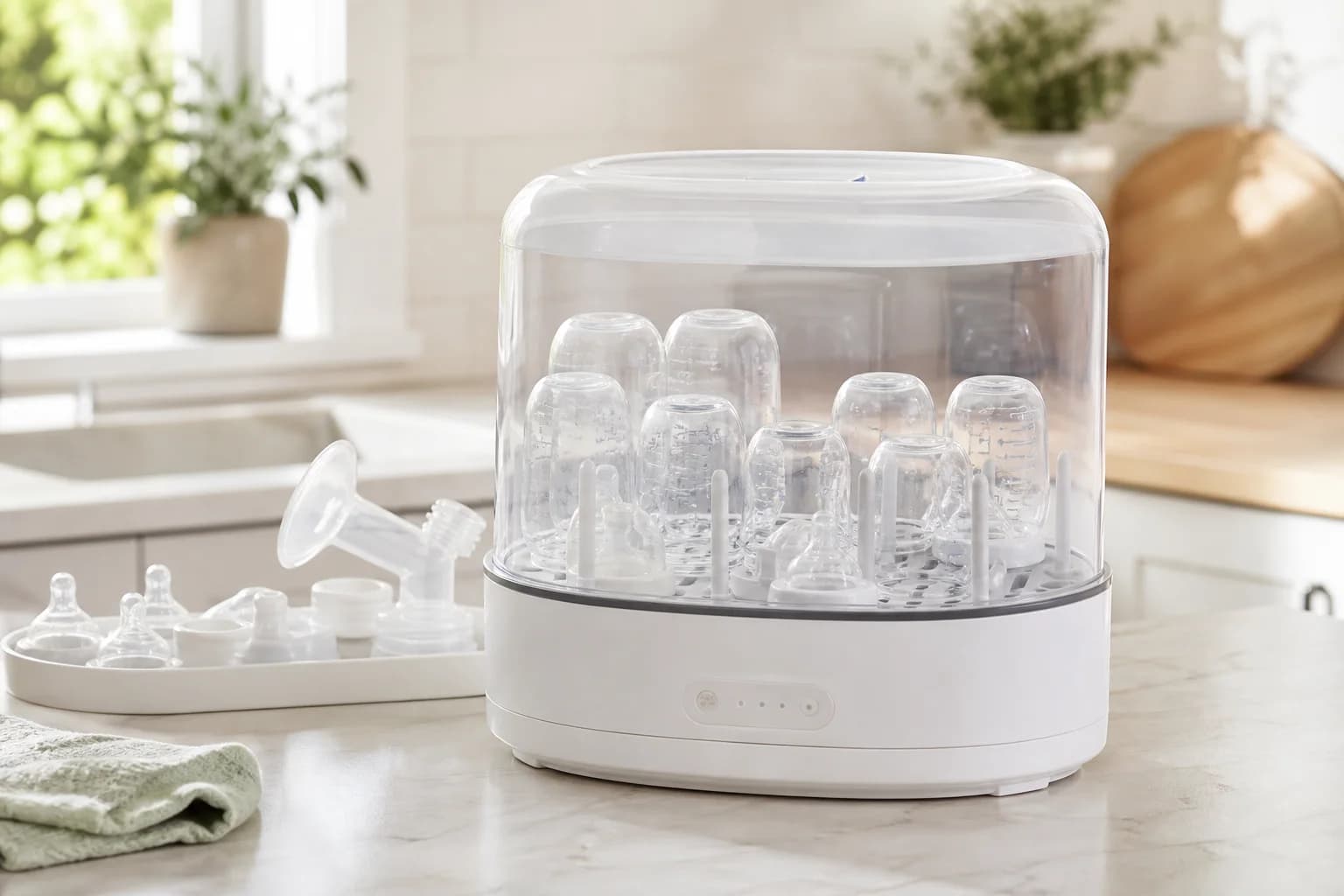
Editorial image for visual context; device appearance and configuration can vary by model and region.
Count parts, not bottles
One feeding can create a bottle, nipple, collar, cap, vent pieces, and pump components. Lay out a complete load from the busiest part of the day and check whether steam and airflow can reach every item.
Calculate cycles per day
Divide the total clean-part demand by the realistic load, then include cycle, cooling, unloading, and refill time. A nominal six-bottle unit may still require several cycles for twins or exclusive pumping.
Protect the overnight reserve
Keep enough clean, dry feeding parts outside the active cycle for the next feed. A machine should reduce routine pressure, not create a single point of failure when a cycle is delayed.
Separate cleaning from sanitizing
Milk residue and film must be removed before sanitizing. If washing is the true bottleneck, compare a purpose-built bottle washer or an appropriate dishwasher workflow instead of buying a larger sterilizer.
Exact model and current six-bottle listing reference.
Buying framework
What to check before you choose
Checklist
Read the exact age, weight, position, cleaning, and safety-use limits for the model.
Check whether the product solves a daily routine problem or only looks useful on a registry.
Confirm the current bundle, accessories, replacement parts, and return path before buying.
Common mistakes
Buying for every possible scenario instead of the next few months of real care.
Letting app features, analytics, or premium bundles distract from safe-use guidance.
Choosing a large appliance or stroller before checking storage and cleaning friction.
Category checks
Capacity matters only after you count real daily parts or meals.
Cleaning access is a buying feature, not a minor detail.
Recurring parts and refills can change the total cost more than the sale price.
Decision rule
Prefer the product that is easier to use consistently within manufacturer guidance; skip upgrades that add cleaning, charging, storage, or app work without solving a current routine problem.