Open the named BabyBjörn Carrier Harmony 3D Mesh listing to compare the live price, availability, delivery, seller, and returns.
Check minimum size, inward-facing setup, leg position, head support, airway visibility, and caregiver adjustment.
Prepared by the NestCheck Picks editorial deskUpdated July 28, 2026
Quick answer
The practical answer
Use the carrier only after the baby meets the listed weight and length requirements. A newborn begins front inward; later carry positions have separate developmental limits.
Direct answer to the buying question
Can a newborn use BabyBjörn Carrier Harmony safely?
Harmony may be used only after the baby meets the current listed minimums and the carrier is configured for front-inward newborn use. Follow the exact manual for the zipper, seat, leg, and head-support settings; keep the face visible and chin clear of the chest. Adjust every caregiver separately, begin with a short supported carry, and stop immediately if the baby slumps or the airway becomes obscured.
Page structure updated August 13, 2026•Evidence checked July 28, 2026•Reconfirm exact model and current terms
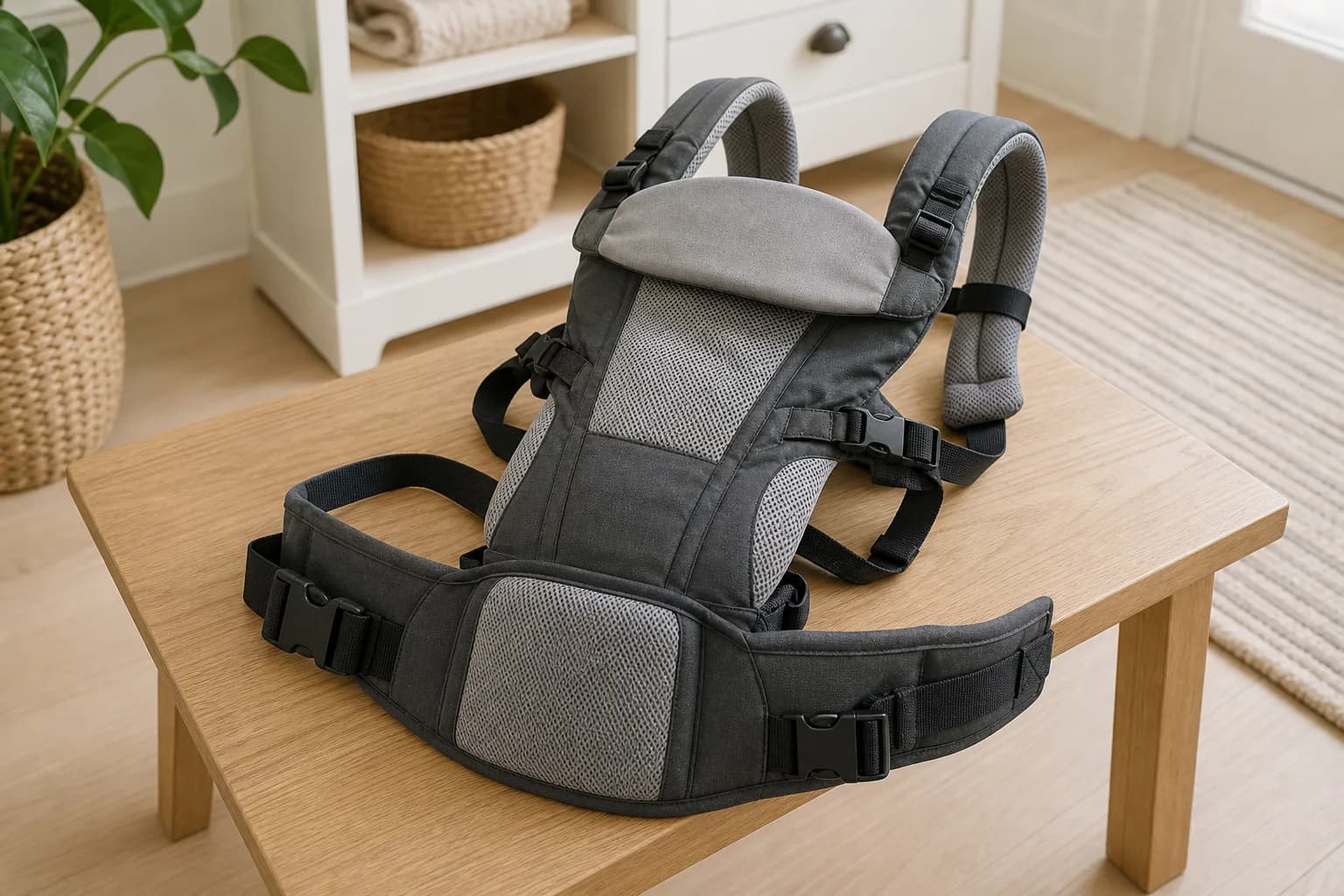
Editorial image for visual context; device appearance and configuration can vary by model and region.
Confirm the stated minimums
Use the carrier only after the baby meets the listed weight and length requirements. A newborn begins front inward; later carry positions have separate developmental limits.
Set the newborn height position
Follow the Harmony manual for zipper, head-support, and leg-position settings. Do not reuse the configuration shown for an older baby.
Keep the airway visible
The baby's face should remain visible, with the chin clear of the chest and the head supported according to the instructions. Reposition immediately if the baby slumps or the fabric covers the face.
Adjust each caregiver separately
Set the waist belt, back support, and shoulder straps for the current wearer. Complete the first short carry with another adult nearby and recheck the fit after moving.
Read the exact age, weight, position, cleaning, and safety-use limits for the model.
Check whether the product solves a daily routine problem or only looks useful on a registry.
Confirm the current bundle, accessories, replacement parts, and return path before buying.
Common mistakes
Buying for every possible scenario instead of the next few months of real care.
Letting app features, analytics, or premium bundles distract from safe-use guidance.
Choosing a large appliance or stroller before checking storage and cleaning friction.
Category checks
Folded size, carry weight, and storage routine matter together.
Check age and weight limits before comparing style.
The right travel product should also survive ordinary errands.
Decision rule
Prefer the product that is easier to use consistently within manufacturer guidance; skip upgrades that add cleaning, charging, storage, or app work without solving a current routine problem.