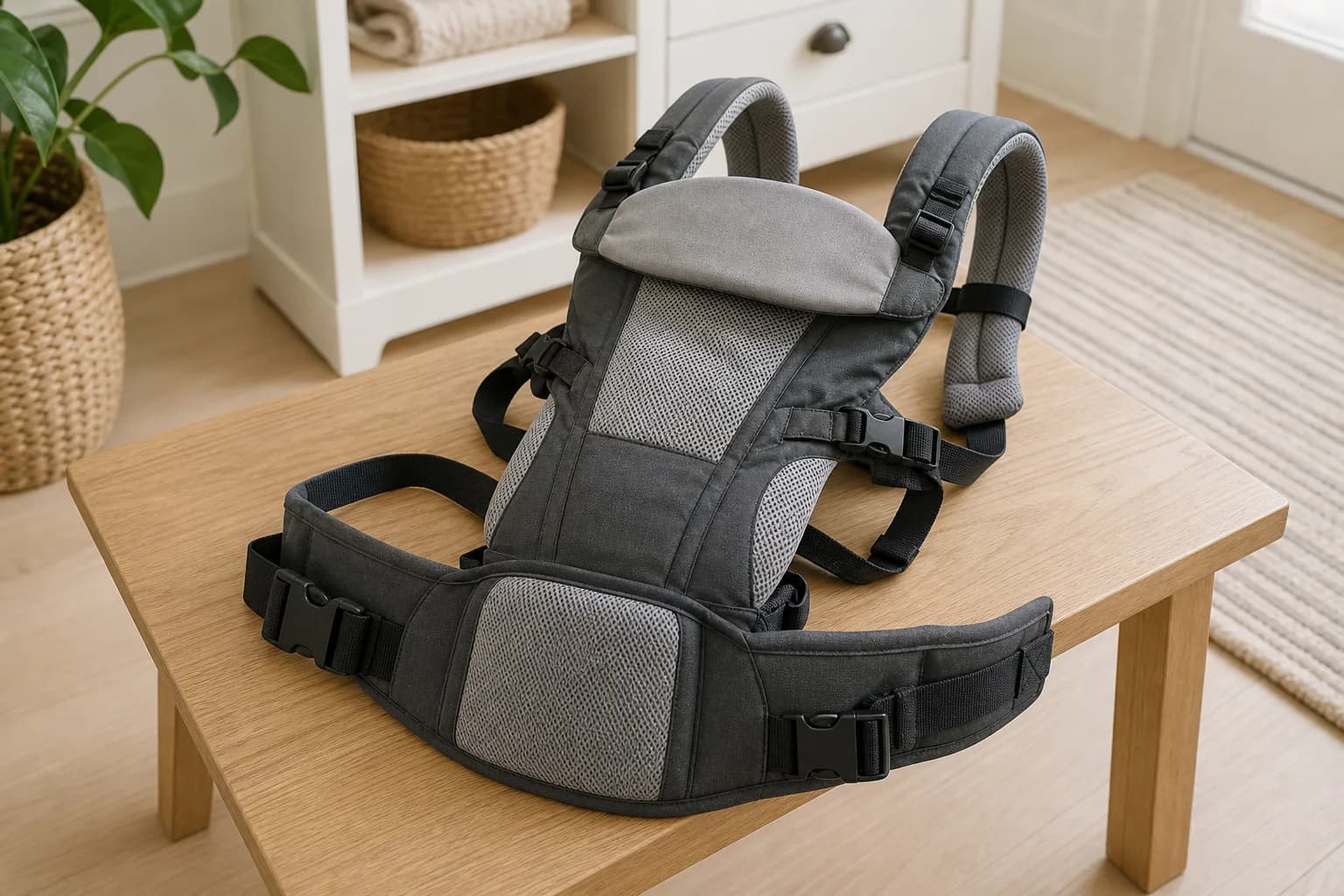
Why a birthday does not approve a new position
Use the table as a way to find the relevant section of Ergobaby's instructions, not as an individual safety assessment. Two babies of the same age can have different size and developmental readiness. Record the baby's current weight and height, the desired mode, and whether its readiness conditions are met. A pass on one condition does not cancel a failure on another. If you are uncertain about your baby's development or fit, ask a qualified clinician and the manufacturer before using the new mode.
Keep newborn use separate from later carrying modes
The carrier's newborn minimum does not mean every position is suitable for a newborn. Start with the newborn inward-facing instructions and check the seat and head support with the carrier in front of you. Do not use photographs of a larger baby to select the settings. The newborn-fit checklist linked below covers this narrower task; this page is the position-selection overview, so it should not replace the actual fitting sequence.
Outward-facing readiness and comfort are different checks
Before choosing outward carry, verify the manufacturer's readiness conditions as well as its recommended comfort range in the table. An age estimate cannot substitute for head control or clearance above the panel. Reassess when the baby is tired or the fit changes, and use the dedicated forward-facing guide for the detailed mode checks. Do not assume that being within the carrier's overall weight limit makes outward carry the right choice for the whole outing.
Check hip and back carry against their own minimum
Hip and back carry share a higher minimum weight and an unassisted-sitting requirement in Ergobaby's FAQ. That is the answer to the common back-carry-age question: the approximate month is only part of the decision. Use the maker's instructions and demonstration for the intended mode before attempting it. Avoid copying a hip or back loading technique from a different carrier, even if its straps look similar.
Make a mode-change record you can use again
Keep the exact carrier model, current measurements, intended position, instruction version, and any unresolved fit question together. Recheck that record as the baby grows or another caregiver uses the carrier. Choose the mode whose complete conditions you can verify now, rather than the most outward-looking or advanced position. This guide is based on manufacturer information and does not claim that we fitted or tested this carrier with a child.