Start with one real serving path
Record typical portion volume, food texture, preparation batch, refrigerator and freezer space, transport distance, daycare labeling, reheating method, and who feeds the child. A large set is not efficient when the chosen sizes create leftovers, occupy the wrong shelf, or cannot follow the household's normal cleaning cycle.
Verify every temperature transition
Use only the manufacturer's stated freezer, refrigerator, dishwasher, microwave, oven, and warming instructions for the exact material and lid. Allow for expansion, vent or remove lids as directed, avoid thermal shock, and inspect glass, seals, and surfaces. A freezer-safe claim does not automatically authorize every reheating method.
Design labeling and rotation
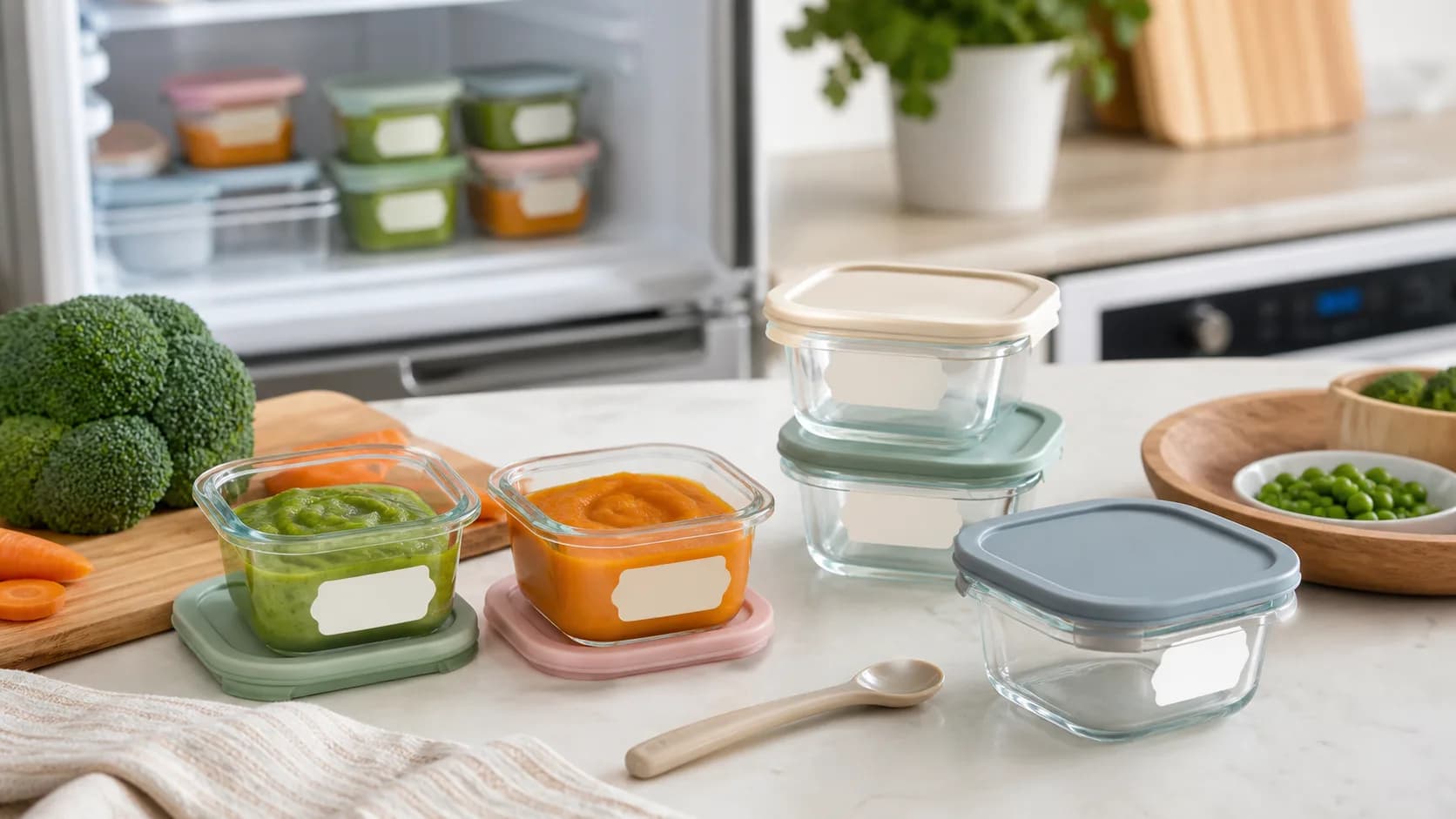
Label contents and preparation or storage date using a system that survives condensation and washing. Put older portions where caregivers can see them, and separate allergen or texture stages when that matters. Follow current food-safety and pediatric guidance for preparation, cooling, refrigeration, freezing, thawing, reheating, and leftovers rather than extending time because the seal looks tight.
Test lids, stacking, and cleaning
Fill one container with the actual texture, close it as another caregiver would, transport it upright and on its side, freeze it, thaw it by the approved method, and clean every groove. Confirm lids remain paired, containers stack without trapping moisture, replacement parts exist, and worn, cracked, chipped, warped, or persistently odorous pieces can be removed.
When ordinary containers or trays are enough
Use existing food-safe containers when their portions, lids, labels, temperature limits, and daycare rules already fit. A covered tray can simplify batch freezing if portions are transferred to dated protected storage as directed. Skip elaborate systems that add proprietary parts or difficult cleaning without making the real feeding workflow safer or easier.