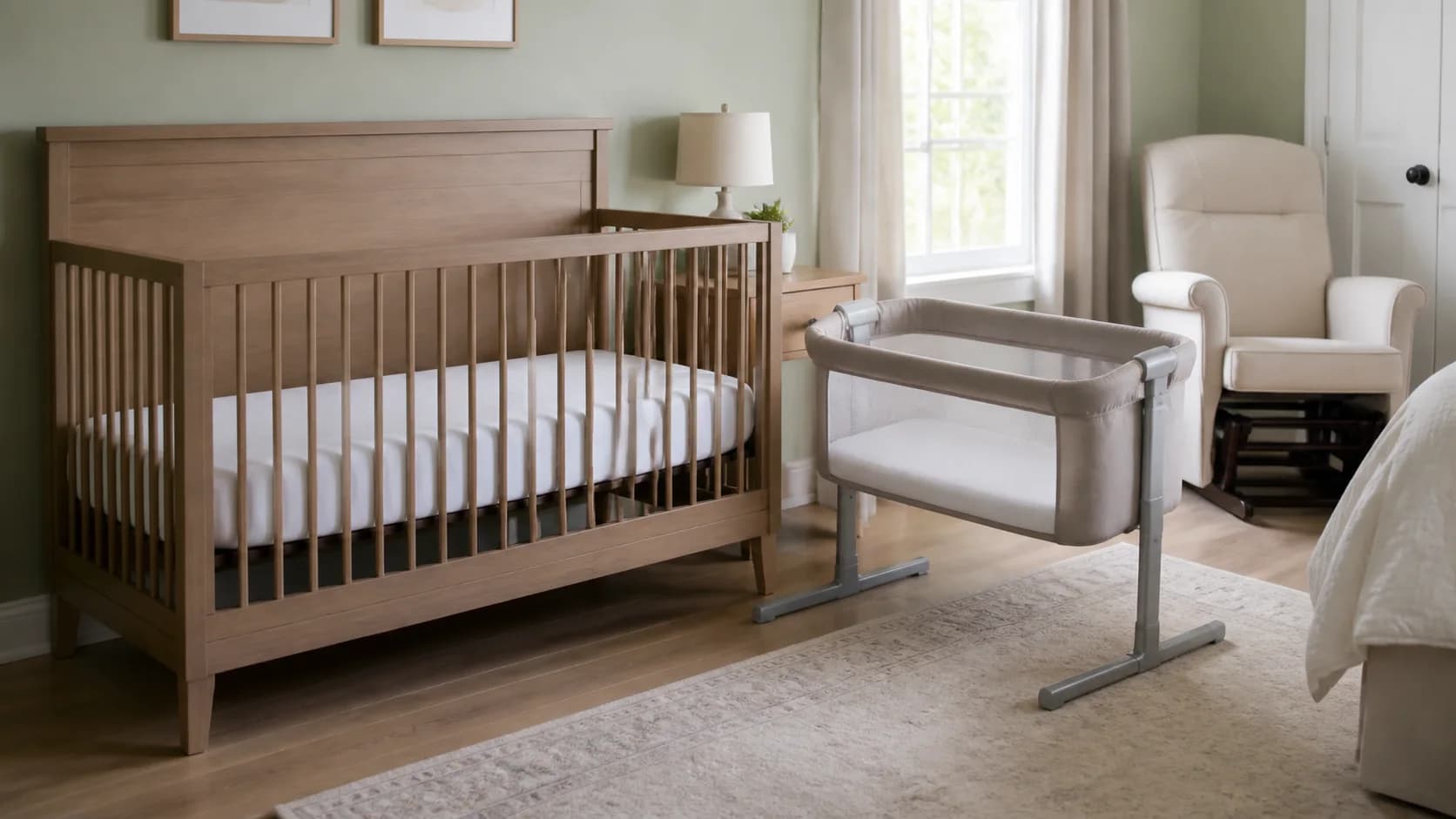
Keep infant sleep separate from chair comfort
The AAP recommends a separate firm, flat sleep surface that meets current safety requirements. A glider, recliner, couch, cushion, feeding pillow, or adult's arms do not become a safe sleep surface because the baby settles there. If the caregiver may fall asleep, plan help and a safe transfer before beginning the feed.
Rehearse every movement without the baby
Set the chair on its final floor surface, then sit, stop the glide, operate recline and footrest controls, stand, and walk the transfer route with empty hands. Check seat height, depth, arm support, and whether the chair moves when weight shifts. Skip it if standing requires momentum, furniture support, or reaching behind.
Measure the complete motion envelope
Mark the chair's furthest glide, swivel, recline, and footrest positions. Preserve a clear route to the crib, doorway, light, and emergency exit. Keep blankets, curtains, cords, toys, children, and pets away from moving joints. For powered models, route the cable where neither chair motion nor a child can reach it.
Inspect before assembly becomes permanent
Follow the exact assembly instructions and torque sequence, then check the base, fasteners, stops, locks, footrest, upholstery seams, and any electrical control. Keep packaging until transfers and motion are proven. Stop use for looseness, unexpected movement, exposed pinch points, damaged wiring, a failed control, or a recall; do not improvise a repair.
Buying decision: the decision
For nursery glider chairs, the purchase threshold is proof that the selected model can support feeding and soothing with a chair that fits the caregiver, room, and nighttime access path. Verify seat height, depth, back, and arm support and glide, swivel, recline, and pinch points before checkout; use room clearance and doorway delivery and fabric cleaning, weight limit, and footrest operation as return-window tests. Do not buy when the mechanism exposes pinch or entrapment hazards, the caregiver cannot rise safely, or the chair blocks crib and emergency access.
Compare the alternatives: the decision
Nursery glider chairs are the stronger choice when their specialized path can support feeding and soothing with a chair that fits the caregiver, room, and nighttime access path. Choose supportive stationary chairs when it reaches the same outcome with fewer fit, setup, or maintenance dependencies—especially when the mechanism exposes pinch or entrapment hazards, the caregiver cannot rise safely, or the chair blocks crib and emergency access.
Compatibility and fit: the decision
Compatibility passes only when all four checks are confirmed: seat height, depth, back, and arm support; glide, swivel, recline, and pinch points; room clearance and doorway delivery; fabric cleaning, weight limit, and footrest operation. Verify the exact model and variant, then test the limiting condition before the return window closes.
Ownership cost and maintenance: the decision
Budget beyond checkout for fabric cleaning, cushion compression, mechanism noise, loose fasteners, floor protection, and eventual use after nursery duty. The disciplined choice is the one that remains serviceable and recoverable after normal wear, cleaning, updates, consumables, or a failed part.
Setup and daily workflow: the decision
Set up nursery glider chairs in this order: measure delivery and full recline paths, sit for a realistic feeding interval, test getting up while holding weight safely, and keep cords away. Put seat height, depth, back, and arm support and glide, swivel, recline, and pinch points on the installation checklist, then build the repeatable routine around room clearance and doorway delivery and fabric cleaning, weight limit, and footrest operation. Revert if the mechanism exposes pinch or entrapment hazards, the caregiver cannot rise safely, or the chair blocks crib and emergency access.