NestCheck Picks
Browse
Travel

Hip-seat Baby Carriers Buying Guide

Current retailer option

Baby Carriers, Baby Carrier with Hip Seat, 3 in 1 Baby Carrier Newborn to Toddler, 3-36 Month Baby Sling, Adjustable Detachable Baby Hip Seat, Enhanced Lumbar Support, Ideal for Hands-Free Parenting

Check current price & availability on Amazon

Current price & availability · purchase link

Open the exact family listing to compare the live price, availability, delivery, seller, and returns.

Which hip-seat baby carriers are worth buying when the real job is to support short carries and repeated up-down transitions with weight borne partly at the waist? This guide turns that question into model-level checks, a reversible setup, a first-year ownership plan, and a clear skip decision.

Prepared by the NestCheck Picks editorial deskUpdated August 9, 2026

Quick answer

The practical answer

Start with child age, weight, and supported positions and waist range and shelf angle, not the longest feature list. Buy only when the product can support short carries and repeated up-down transitions with weight borne partly at the waist, the setup is realistic, and the household accepts foam and buckle wear, fabric cleaning, storage bulk, caregiver fit changes, and limited hands-free use in some configurations. Skip it when the child lacks required control, the waistband cannot fit securely, pain increases, or the seat is being used as unsupported hands-free restraint.

Common buying question

Which hip-seat baby carriers are worth buying when the real job is to support short carries and repeated up-down transitions with weight borne partly at the waist?

This URL answers the buying decision and does not substitute for the sibling comparison, fit, ownership, workflow, safety decisions.

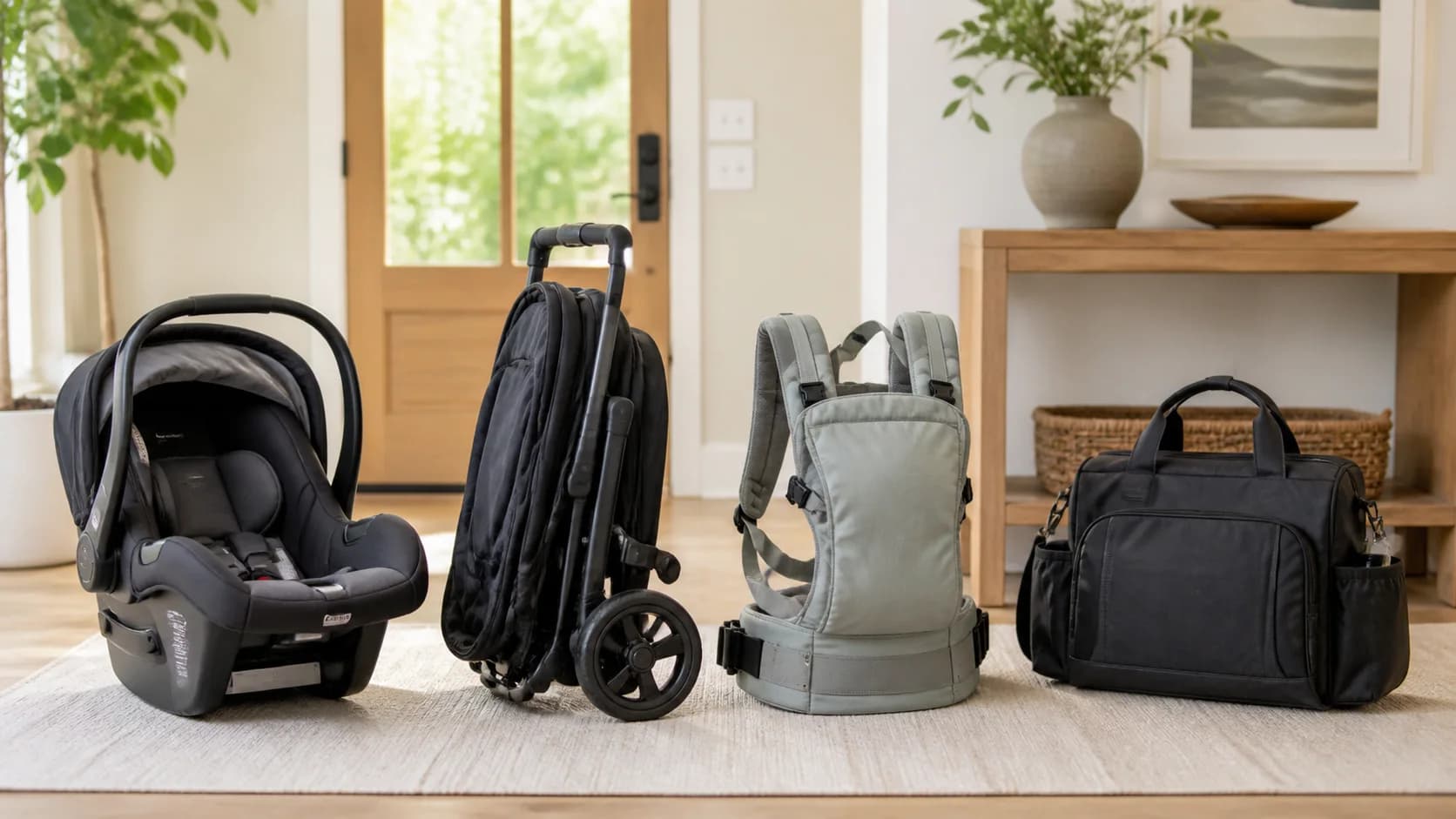
Original editorial scene with unbranded baby travel equipment shown without a child
Original editorial image for category, fit, and use context; verify the exact linked product appearance and configuration on the retailer page.

Start with the job: support short carries and repeated up-down transitions with weight borne partly at the waist

Hip-seat baby carriers should earn their cost and ongoing effort by solving that repeated job, not by winning on a lifestyle photo, extra padding, an app feature, or a convenience claim that does not change the instructions. Before comparing listings, record the child's current age, weight and development, each caregiver, room or vehicle measurements, transfer and cleaning routine, current instructions, and the safety problem being solved. Then compare the product with soft structured carriers under the same real conditions and for the same period.

The first two buying checks are child age, weight, and supported positions and waist range and shelf angle

For hip-seat baby carriers, child age, weight, and supported positions and waist range and shelf angle usually eliminate more poor choices than a long feature comparison. Confirm both from the exact current product details or instructions. If either depends on an approved base, vehicle position, attachment point, replacement part, consumable, compatible accessory, caregiver technique, or professional fitting help, include that dependency in the purchase and setup plan rather than treating it as a later detail.

Do not ignore structured panel and head support or caregiver torso fit, heat, and stair use

For this hip-seat baby carriers decision, structured panel and head support and caregiver torso fit, heat, and stair use determine whether a product that looks correct online will still work in the real use case. Measure or test the limiting condition across the actual child stage, caregiver, room or vehicle, transfer, cleaning routine, supervision, and emergency fallback; preserve packaging and use the return period to reproduce the most demanding normal task rather than an ideal demonstration.

Price the complete first year

The family-specific ownership plan includes foam and buckle wear, fabric cleaning, storage bulk, caregiver fit changes, and limited hands-free use in some configurations. Also price approved replacement parts, cleaning supplies, consumables, storage, travel handling, registration, and the cost of outgrowing the product. A lower checkout price is not better when it creates repeated work or leaves the household unable to recover from a common failure.

Keep a written skip decision

Do not buy when the child lacks required control, the waistband cannot fit securely, pain increases, or the seat is being used as unsupported hands-free restraint. That is not a missing premium feature; it is evidence that the product does not fit the current job. Keep the simpler soft structured carriers route available until the new option passes fit, normal use, maintenance, and recovery checks.

Current Amazon option

Check this exact product

Baby Carriers, Baby Carrier with Hip Seat, 3 in 1 Baby Carrier Newborn to Toddler, 3-36 Month Baby Sling, Adjustable Detachable Baby Hip Seat, Enhanced Lumbar Support, Ideal for Hands-Free Parenting

ASIN
B0DPHQHWF7
Brand
Plateau ELK
Listing checked
8/9/2026

Compare the current title, ASIN, variant, seller, stock, shipping, price, and return path before ordering.

Side-by-side checks

Buying checks that change the hip-seat baby carriers decision

CheckWhat to verifyDecision effect
Decision 1child age, weight, and supported positionsTreat any unanswered question about child age, weight, and supported positions as a reason to pause rather than assume fit.
Decision 2waist range and shelf angleTreat any unanswered question about waist range and shelf angle as a reason to pause rather than assume fit.
Decision 3structured panel and head supportTreat any unanswered question about structured panel and head support as a reason to pause rather than assume fit.
Decision 4caregiver torso fit, heat, and stair useTreat any unanswered question about caregiver torso fit, heat, and stair use as a reason to pause rather than assume fit.
Setup prooffit the waistband on the body, use only approved positions, support the child during transitions, and practice before stairs or long outingsComplete this path before retiring the previous routine or equipment.
Exit conditionthe child lacks required control, the waistband cannot fit securely, pain increases, or the seat is being used as unsupported hands-free restraintUse soft structured carriers or keep the current setup when this condition applies.

Primary sources

References used for this guide

  • NHTSA — Car Seats and Booster Seats

    Authoritative car-seat selection, installation, and child-fit baseline; other travel products still require their exact instructions. Verify the exact product instructions and current listing separately.

Public owner context

Questions to answer before buying

Community discussions help surface installation, fit, maintenance, and failure questions. They are anecdotal context, not product specifications or a substitute for current instructions.

  • Reddit community discussion

    Hip seat carriers?

    A public owner discussion used to identify questions and failure modes. Comments are anecdotal; no username, vote count, rating, or verbatim review is reproduced, and product facts must be verified independently.

How this page was governed

Page-specific editorial method

  1. 1.Define one independent purchase or use question for this URL.
  2. 2.Verify the four family-specific dimensions: child age, weight, and supported positions; waist range and shelf angle; structured panel and head support; caregiver torso fit, heat, and stair use.
  3. 3.Use an exact Amazon ASIN only as a current retailer identity and checkout anchor, not as hands-on evidence.
  4. 4.Separate public community discussion from official specifications and editorial judgment.
  5. 5.Keep a written stop condition and a reversible test path.

Related guide

Hip-seat Baby Carriers vs. soft structured carriers

Choose between hip-seat baby carriers and soft structured carriers for one concrete job: support short carries and repeated up-down transitions with weight borne partly at the waist. Compare four product-level checks, ownership cost, and the failure mode you can actually recover.

Related guide

Hip-seat Baby Carriers: Compatibility and Fit Guide

Will hip-seat baby carriers fit the exact user, space, equipment, and installation path? This guide turns that question into model-level checks, a reversible setup, a first-year ownership plan, and a clear skip decision.

Related guide

Hip-seat Baby Carriers: Ownership Cost and Maintenance

What will hip-seat baby carriers cost and require after checkout? This guide turns that question into model-level checks, a reversible setup, a first-year ownership plan, and a clear skip decision.

Related guide

Hip-seat Baby Carriers: Setup and Daily Workflow

How should hip-seat baby carriers be set up and used without adding a new daily chore? This guide turns that question into model-level checks, a reversible setup, a first-year ownership plan, and a clear skip decision.

Related guide

Hip-seat Baby Carriers: Safety Limits and When to Skip

When should a caregiver skip or stop using hip-seat baby carriers? This guide turns that question into model-level checks, a reversible setup, a first-year ownership plan, and a clear skip decision.

Related guide

Travel Stroller Guide for Small Cars and Apartments

How to compare fold size, weight, recline, basket access, and daily comfort before buying a travel stroller.

Related guide

Travel Stroller Folded Size Checklist

A practical checklist for trunk fit, hallway storage, airline assumptions, recline, and daily errand use.

Related guide

Ergobaby Omni Breeze Positions by Age: Inward, Outward, Hip & Back

Map every Omni Breeze carry position by size and development, including newborn inward carry, forward-facing readiness, hip carry, back carry, seat width, and setup changes.

Hip-seat Baby Carriers Buying Guide