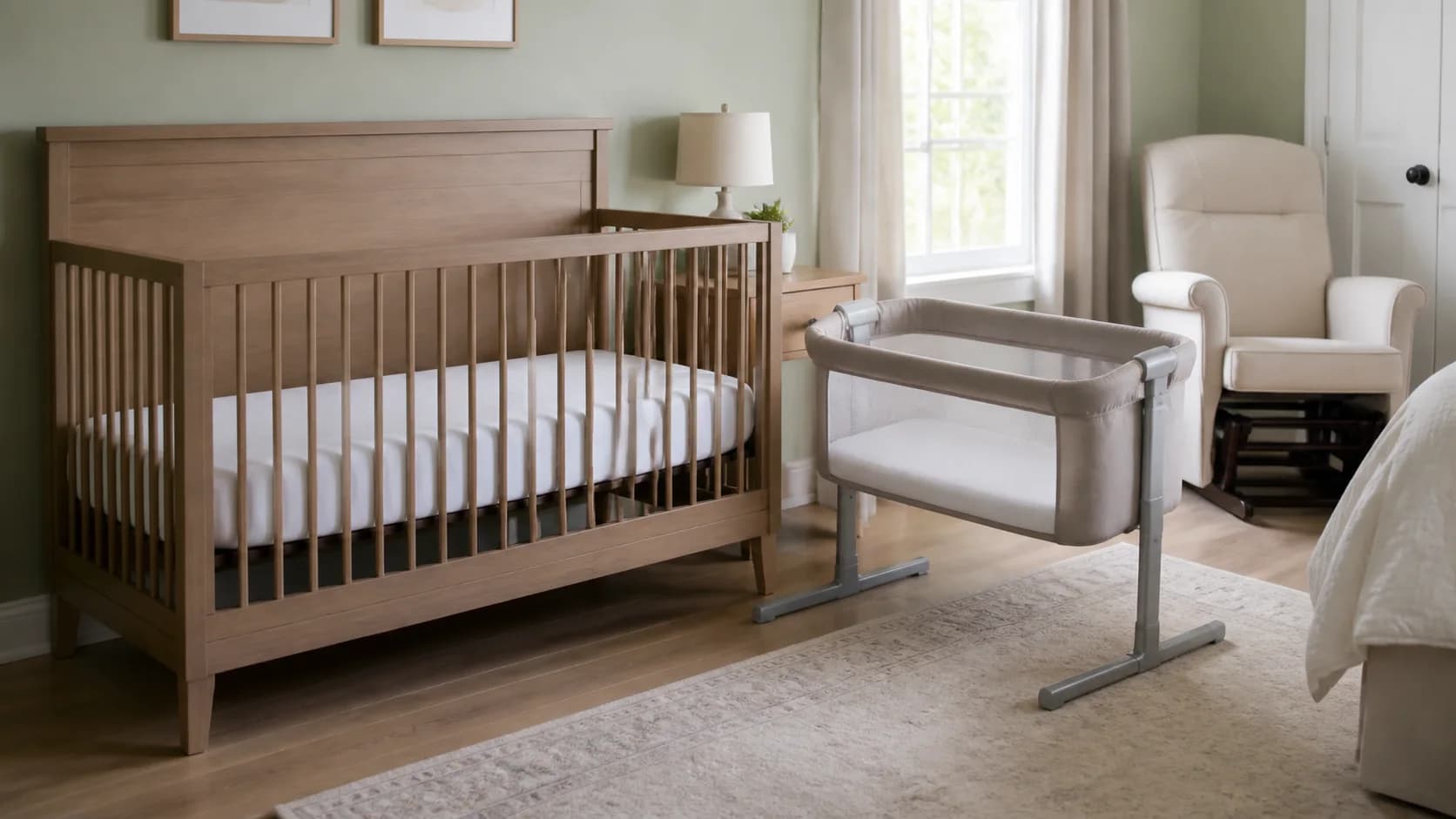
Bedside bassinets: a safety boundary is a stop, not a target
Confirm the current instructions, model identity, recall status, approved configuration, and the four controlling conditions: age, weight, and milestone stop limits; firm flat included mattress; bed height and side configuration; and stable base, gaps, sheets, and travel locks. Recheck them after movement, cleaning, growth, wear, or a caregiver change. Stop immediately when the surface is inclined or soft, gaps or added bedding exist, the product is recalled, or the infant has reached any stop-use limit; do not use padding, adapters, copied settings, or anecdotes to extend the boundary.
Use the exact current instructions
Begin with age, weight, and milestone stop limits and firm flat included mattress. Confirm the complete model, date or lot information when present, approved configuration, child limits, recall status, and registration path. Category advice and community discussion cannot replace the instructions for the selected product.
Treat bed height and side configuration as a boundary
For bedside bassinets, bed height and side configuration is a boundary rather than a target to stretch. Age, weight, developmental, installation, sleep, restraint, supervision, and environmental limits remain controlling; added padding, straps, adapters, accessories, online tips, or a different model's manual do not expand them.
Recheck stable base, gaps, sheets, and travel locks during normal use
A bedside bassinets product can pass initial assembly and become unsafe after movement, growth, cleaning, a loose part, a changed vehicle or room, or a different caregiver routine. Recheck stable base, gaps, sheets, and travel locks, fit, and physical condition before relying on convenience features.
Practice the safe-use workflow
Follow this sequence: assemble exactly, check all locks and level, use only the approved mattress and sheet, and place cords and bedding outside the sleep area. Practice when rested and able to observe each step. Keep a safe manual fallback and ensure every caregiver understands stop-use conditions, emergency removal, and the location of current instructions.
Know when to stop
Stop when the surface is inclined or soft, gaps or added bedding exist, the product is recalled, or the infant has reached any stop-use limit. Also stop after damage, a recall, missing required parts, unknown history, or any inability to follow the exact instructions. Contact the manufacturer or an appropriate qualified professional rather than improvising around a safety boundary.