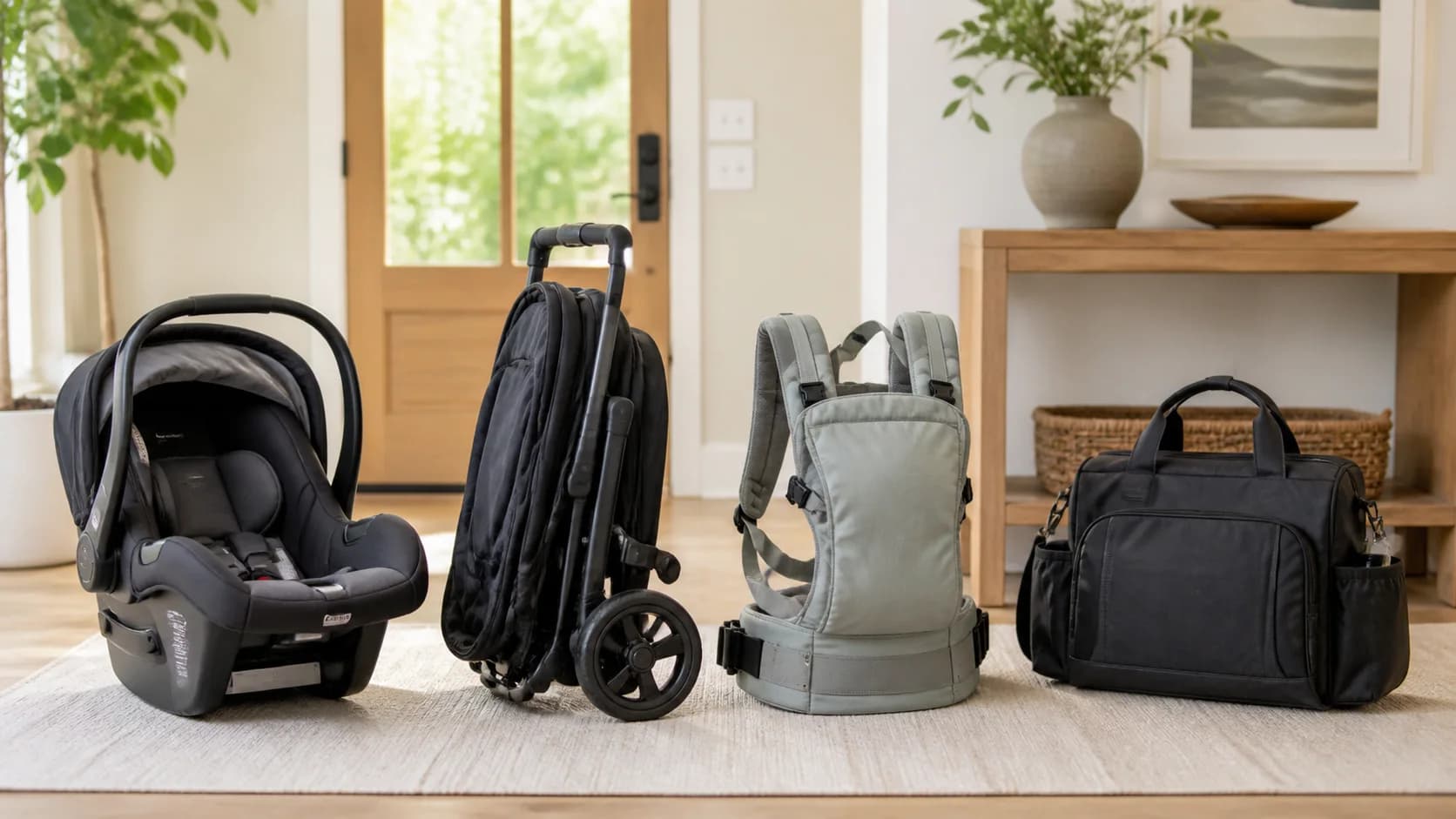
Baby travel systems: a three-gate buying decision
Gate one is job proof: the exact model must pair an infant car seat and stroller that connect through an approved manufacturer path. Gate two is fit proof: confirm exact seat and stroller compatibility and car-seat installation and carrier weight from current product-level evidence. Gate three is ownership proof: test stroller seat limits and recline and fold, cargo space, adapters, and future use after infancy during normal use while the decision is still reversible. A failure at any gate is a reason to keep separately selected car seats and strollers, especially when the bundled car seat fits the stroller but not the vehicle or child, connection is ambiguous, or separately chosen products fit better.
Start with the job: pair an infant car seat and stroller that connect through an approved manufacturer path
Baby travel systems should earn their cost and ongoing effort by solving that repeated job, not by winning on a lifestyle photo, extra padding, an app feature, or a convenience claim that does not change the instructions. Before comparing listings, record the child's current age, weight and development, each caregiver, room or vehicle measurements, transfer and cleaning routine, current instructions, and the safety problem being solved. Then compare the product with separately selected car seats and strollers under the same real conditions and for the same period.
The first two buying checks are exact seat and stroller compatibility and car-seat installation and carrier weight
For baby travel systems, exact seat and stroller compatibility and car-seat installation and carrier weight usually eliminate more poor choices than a long feature comparison. Confirm both from the exact current product details or instructions. If either depends on an approved base, vehicle position, attachment point, replacement part, consumable, compatible accessory, caregiver technique, or professional fitting help, include that dependency in the purchase and setup plan rather than treating it as a later detail.
Do not ignore stroller seat limits and recline or fold, cargo space, adapters, and future use after infancy
For this baby travel systems decision, stroller seat limits and recline and fold, cargo space, adapters, and future use after infancy determine whether a product that looks correct online will still work in the real use case. Measure or test the limiting condition across the actual child stage, caregiver, room or vehicle, transfer, cleaning routine, supervision, and emergency fallback; preserve packaging and use the return period to reproduce the most demanding normal task rather than an ideal demonstration.
Price the complete first year
The family-specific ownership plan includes extra bases, adapters, stroller wheels, cleaning, storage, expiration of the car seat, and whether the stroller remains useful later. Also price approved replacement parts, cleaning supplies, consumables, storage, travel handling, registration, and the cost of outgrowing the product. A lower checkout price is not better when it creates repeated work or leaves the household unable to recover from a common failure.
Keep a written skip decision
Do not buy when the bundled car seat fits the stroller but not the vehicle or child, connection is ambiguous, or separately chosen products fit better. That is not a missing premium feature; it is evidence that the product does not fit the current job. Keep the simpler separately selected car seats and strollers route available until the new option passes fit, normal use, maintenance, and recovery checks.